Bizə e-poçt göndərinsupport@prospect.az

Ideas to grow your business

Practical articles on management, finance, sales, automation, and ERP systems.

54 articles

ERP systems

Inventory software: when is Excel no longer enough?

If you have only a few goods, you can manage your warehouse in an Excel spreadsheet. But once you have two warehouses and hundreds of products, the spreadsheet no longer shows the real stock balance. In this article we explain how to recognize when it is time to switch to inventory software and what to look for in it.

Management

The Role of ERP in the Digital Age

Our world is rapidly digitalizing, and the business environment is transforming completely. New technologies, online platforms, artificial intelligence, and big data make management and decision-making more complex and faster than ever before. For small and medium entrepreneurs, manufacturers, and managers, this digital era brings both opportunities and challenges.

ERP systems

Gain a Competitive Advantage with ERP

Today’s market environment is anything but stable. Competitors are using technology to get ahead, and customer expectations are rising rapidly. If you're still managing your operations with paper or disconnected systems, it means your competitors are faster, more agile, and making smarter decisions.

Management

The risks of business management without ERP systems

Everything seems fine… or does it? In daily operations, everything appears to be under control: accounting is done in Excel, inventory is listed on paper, and salespeople share information via WhatsApp. But what if something goes wrong in this setup? Or a key employee leaves the company? Or a competitor starts using an ERP system and begins operating much faster and more accurately?

ERP systems

The benefits of ERP for small and medium-sized businesses

Why do businesses that want to grow get stuck? Small and medium-sized businesses (SMEs) often start with enthusiasm and ambition. However, as operations expand, daily tasks become more complex: accounting is in one place, sales data somewhere else, warehouse capacity is unmanaged, and production details are known only by one or two employees. This fragmented structure not only hinders growth but also makes strategic decision-making difficult. This is where ERP systems come into play.


ERP systems

Where to Start with ERP Implementation?

Why is there confusion at the beginning of ERP implementation? For small and medium business owners, implementing ERP can sometimes seem difficult and complicated. Which processes should be automated, which module to start with, and overall, where does this journey begin — these questions often create difficulties in decision-making. In fact, if ERP implementation is successful, it causes significant changes and development in the business. Therefore, it is important to start with the right steps and a plan.

ERP systems

Employee Adaptation During ERP Transition: The Key to Successful Transformation

The Role of Employees and Adaptation Challenges in ERP Implementation Transitioning to an ERP system is not just a technological change but also a change in how people work. In small and medium businesses, especially where traditional management habits are strong, employee adaptation to the new system is one of the biggest challenges.

ERP systems

Results Achieved After Transitioning to an ERP System

What Changes in Business After Implementing an ERP System? For small and medium businesses, transitioning to an ERP system often means a significant investment and change. Therefore, owners and managers frequently ask, "What benefits will this system bring to my business?"

Management

Real-Time Reporting with ERP: The Key to Quick Decisions

Real-time reporting means the automatic collection, processing, and instant presentation of data. If an ERP system is properly set up, users can access up-to-date information (sales, finance, inventory, production, etc.) with a single click at any time.

Management

Ways to Measure Efficiency with ERP

Compare the duration of processes before and after ERP implementation. For example, how much has the order processing or report preparation time decreased?

ERP systems

Benefits of Multilingual ERP Systems

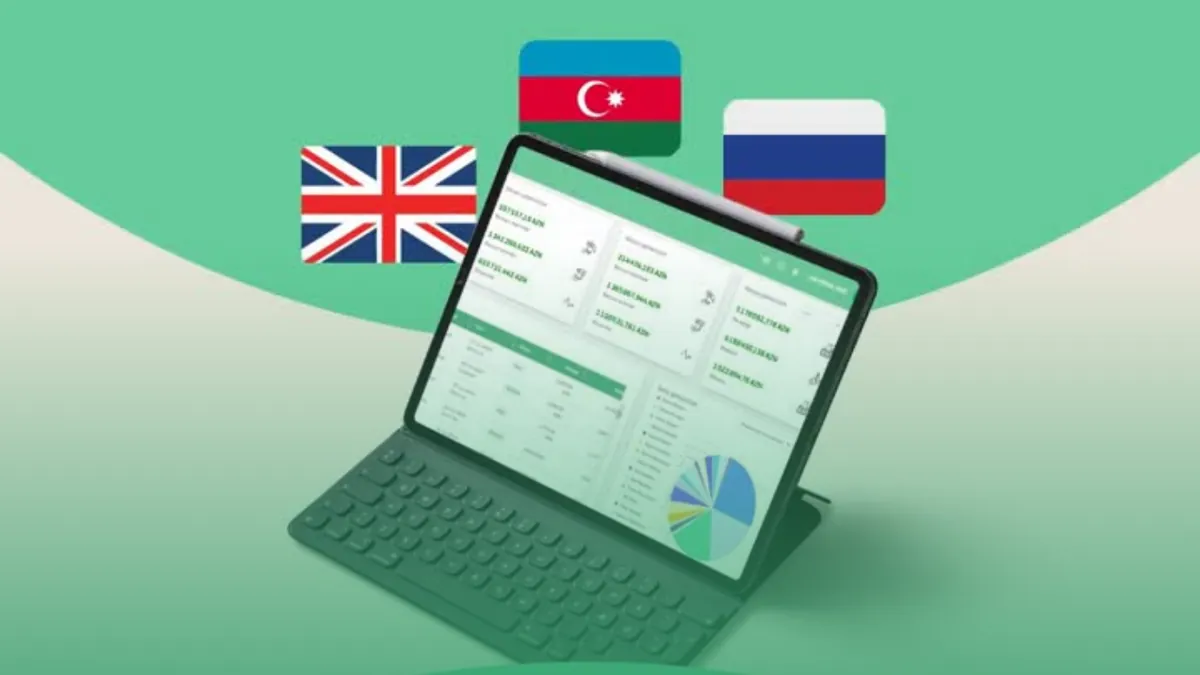
Qloballaşan biznes dünyasında fərqli ölkələrdə və dillərdə fəaliyyət göstərən şirkətlər üçün multidilli ERP sistemləri artıq lüks deyil, zərurətdir. İstər beynəlxalq bazara çıxmaq, istərsə də bir neçə regionda çalışan komandalar arasında koordinasiyanı gücləndirmək üçün ERP sisteminin bir neçə dili dəstəkləməsi mühüm əhəmiyyət daşıyır.

ERP systems

10 Benefits of Switching to an ERP System

In today’s world, any company that wants to stay competitive must manage its processes more flexibly and efficiently. Traditional methods and using various standalone programs are no longer enough. This is where ERP (Enterprise Resource Planning) systems come into play.

Management

Mistakes Made by Companies Operating Without ERP

In small and medium-sized businesses, the mindset of “We don’t need ERP for now — we can manage everything” is quite common. However, this way of thinking can lead to costly mistakes, missed opportunities, and management chaos in the long term.

ERP systems

ERP Accessibility for Regions: Opportunities and Challenges

ERP systems were once used only in large enterprises located in major cities. However, as technology has advanced, ERP has become accessible and essential for companies operating in regional areas as well. In fact, regional businesses need ERP even more. Because resources are limited, teams are small, and the demand for proper management is higher.

Finance

How Does the Monthly Payment Model Work in ERP Systems?

Traditionally, ERP systems were acquired with a large one-time investment and installed on the company’s own servers. This approach was suitable for large enterprises. However, today, especially for small and medium-sized businesses (SMBs), a more flexible and accessible model is available — the monthly payment (subscription-based) ERP model. In this article, we’ll explain how this monthly model works and explore its real-world benefits with practical business cases.

Finance

How Quickly Does an ERP Investment Pay Off?

ERP (Enterprise Resource Planning) systems are technological solutions that enable modern businesses to manage their operations in a centralized and efficient way. While these systems were once seen as tools primarily for large corporations, today small and medium-sized businesses are increasingly benefiting from them. However, one of the key questions for decision-makers is how fast this investment pays off — in other words, what is the return on investment (ROI)?

ERP systems

Key differences between CRM and ERP systems

What Are CRM and ERP? Why Are They Often Confused? CRM (Customer Relationship Management) is a system focused on managing relationships with customers. It's essential for sales, marketing, and customer service teams. ERP (Enterprise Resource Planning) is designed to manage internal business processes such as finance, human resources, logistics, and supply chain in a centralized system.

ERP systems

ERP for manufacturing companies: How to make production management more effective?

The manufacturing sector is highly competitive, complex, and constantly evolving. Proper resource management, inventory tracking, production process optimization, and quality control are among the key challenges faced by every manufacturing company. In response to these challenges, ERP systems (Enterprise Resource Planning) have become a strategic management tool for production enterprises.

ERP systems

ERP for Manufacturing Companies: How to Optimize Production Management?

The manufacturing sector is highly competitive, complex, and constantly evolving. Proper resource management, inventory tracking, production process optimization, and quality control are among the key challenges faced by every manufacturing company. In response to these challenges, ERP systems (Enterprise Resource Planning) have become a strategic management tool for production enterprises.

ERP systems

SaaS-Based ERP: The Most Effective and Budget-Friendly Solution for Small and Medium Business Owners

Small and medium business owners are constantly looking for more agile and affordable solutions due to limited resources. SaaS (Software as a Service)-based ERP systems provide budget-friendly and easy-to-use tools that meet these needs. In this article, we will discuss how SaaS ERP systems can be highly beneficial for small and medium businesses and how to select the best solution for your needs

ERP systems

How to Choose the Right ERP System for Your Business Needs?

ERP (Enterprise Resource Planning) systems are an excellent solution for integrating and automating business processes. However, selecting the right ERP program requires considering many factors. In this article, we will thoroughly explore each stage—from identifying business needs to implementing an ERP system.

Finance

Selection of Accounting Systems in Businesses: Management Accounting and Financial Accounting

Behind every successful business lies a well-chosen accounting system. These systems typically fall into two main categories: management accounting and financial accounting. While management accounting supports internal decision-making, financial accounting focuses on external reporting and compliance. In this post, we’ll help you understand how to choose the right system based on your company’s needs.

ERP systems

What to Consider When Choosing an ERP System?

Choosing the right ERP software is a strategic decision for any business. The right solution can streamline operations, increase productivity, and offer better control over costs. In this blog post, we’ll explore the key factors to consider when selecting an ERP system to ensure long-term success and sustainable growth.

ERP systems

The Power of ERP Solutions in Modern Business Operations

In today’s fast-paced business world, companies need streamlined operations, automated workflows, and real-time data management to stay competitive. ERP systems provide an all-in-one solution to integrate various business processes, improve efficiency, and reduce costs. But how do different industries benefit from ERP, and what are the key trends shaping its future? Let’s explore!

ERP systems

How Can ERP Benefit Your Business?

Modern businesses need efficient management systems to keep up with the rapid pace of development. ERP (Enterprise Resource Planning) helps optimize business processes and ensures effective resource management.

ERP systems

Why Does Your Business Need an ERP System?

ERP System: How Can It Make Your Business More Efficient? In today's competitive business environment, companies need innovative solutions to stay ahead and optimize their processes. An ERP (Enterprise Resource Planning) system integrates key operations such as finance, human resources, procurement, and sales into a single platform, making management more efficient. In this blog, we will explore the impact of ERP systems on businesses, how they reduce workload, automate operations, and optimize costs. If you want to learn how ERP can benefit your business, keep reading!

Sales

Why is IVR important?

A Customer Story we came across by chance about the IVR system used in an organization where we set up a Contact Center platform:

Automation

Why are biometric systems so important?

It is no secret that the management of an organization primarily involves preventing factors that hinder the execution of its functions. One such factor is the violation of access rights to confidential objects or data sources. In the 21st century, to prevent such violations, many companies use fully or partially biometric systems.

ERP systems

Small business and ERP

In today's business landscape, any business can implement an ERP solution. ERP allows small businesses to appear and operate like large-scale enterprises.

ERP systems

ERP system in the organization

High competition is one of the key features of the modern market. To ensure the competitiveness of products (works, services), it is necessary to learn how to effectively manage all business processes.

Sales

CRM system for small business

Today, in a time when small businesses are accompanied by high competition, every customer is valued like gold. Competitors are increasing, and the offers are even more. Can your business survive in such conditions?