1. How to Identify Your Business Needs?
The first and most crucial step in choosing an ERP system is correctly identifying your business needs. To do this, answer the following questions:
- Which business processes do you want to automate?
- What shortcomings exist in your current system?
- What are your expectations from an ERP system?
Real Case:
Company: "AzərTəchizat MMC"
"AzərTəchizat MMC" is a small and medium-sized business. The main problem was order management and the inability to track products in the warehouse in real-time. Before choosing an ERP system, the company’s management analyzed internal processes, identified key problems, and started searching for a system that could solve them.
2. Key Differences and Options in ERP Systems
ERP programs are divided into different categories. To choose the most suitable ERP system for your company, it is important to understand the main differences:
- Cloud-based vs. On-premise ERP: Cloud-based ERP systems are more flexible and cost-effective, but large companies often prefer on-premise solutions.
- Industry-specific ERP solutions: There are specialized ERP systems for different industries, such as manufacturing, retail, and finance.
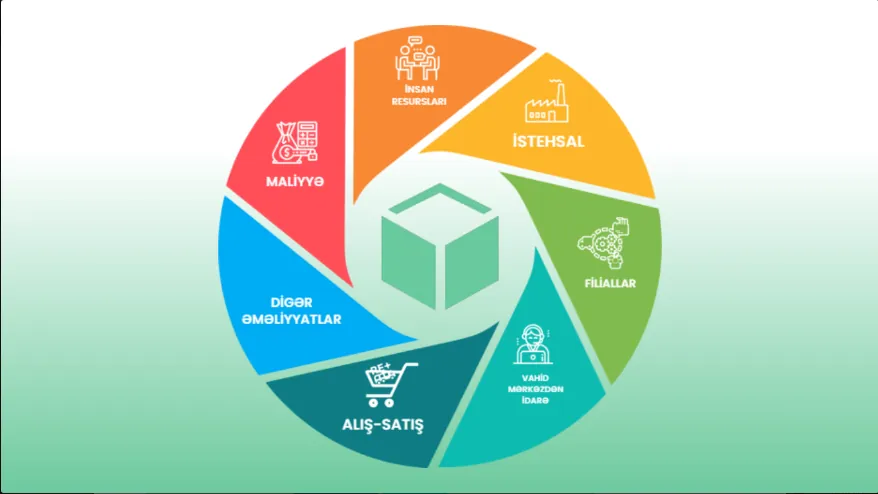
- Modular structure: ERP systems consist of separate modules, such as accounting, human resources management, sales, and inventory control.
Real Case:
Company: "Bakı Sənaye LTD"
"Bakı Sənaye LTD" is a manufacturing company that compared cloud-based and on-premise ERP systems. Due to its large volume of data, the company chose an on-premise solution, as it provided a higher level of security and customization capabilities.
3. Comparing ERP Programs: Which One Suits You?
When selecting an ERP system, it is important to consider the following criteria:
- Price and licensing conditions
- Ease of use and user-friendly interface
- Availability of technical support and local representatives
- Integration capabilities and API support
Real Case:
Company: "Xəzər Market"
"Xəzər Market" is a retail chain that conducted a comparative analysis of different ERP programs and selected the one that best suited their business needs.
4. How to Effectively Implement an ERP System?
For successful ERP implementation, follow these steps:
- Form a team: Create a dedicated project group.
- Migrate data: Properly transfer data from old systems to the ERP system.
- Train employees: Organize training sessions for staff.
- Test the system: Conduct a trial phase before full deployment.
Real Case:
Company: "Baku Logistics"
"Baku Logistics" conducted a pilot project before fully implementing its ERP system. Initially, only the accounting module was launched, and after successful testing, the system was expanded to all departments.
5. Expert Tips for Choosing an ERP System
Experts recommend considering the following factors when choosing an ERP system:
- Test multiple demo versions.
- Examine security and data protection policies.
- Evaluate the scalability of the system.
- Choose an ERP system that fits your company’s size.
- Check for the availability of local support services.
Real Case:
Company: "Azərbaycan Texnologiya Şirkəti"
"Azərbaycan Texnologiya Şirkəti" consulted various experts before selecting an ERP system and chose a solution that could be scaled as the business grew.
Conclusion
Choosing an ERP system is a strategically important decision for your business. To select the right ERP program, you need to determine your business needs, compare available ERP solutions, and effectively manage the implementation process. By relying on the ERP program comparison, real cases, and expert advice mentioned above, you can more easily choose the right ERP system for your business.